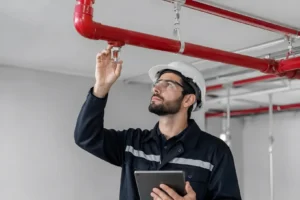
A fire sprinkler system only works if it’s ready when needed, and readiness isn’t something you can confirm by looking at it. Fire sprinkler monitoring Arizona facilities rely on confirms that readiness around the clock, catching both real fire events and the quiet failures that would otherwise go unnoticed until it’s too late. This guide explains how monitoring works, what codes require, and why it matters for both your building’s safety and your legal liability.
What Fire Sprinkler Monitoring Actually Tracks
Sprinkler monitoring covers more than the moment water starts flowing. A complete system tracks several conditions simultaneously:
- Water flow, signaling the central station the moment a sprinkler head activates.
- Valve position, using tamper switches to detect if a valve that should stay open has been closed, intentionally or by mistake.
- System pressure, with low-pressure alarms catching supply issues before they compromise the system’s ability to respond.
- Temperature in unheated sprinkler rooms, where applicable, to catch freeze risk before it becomes a functional failure. Even in Arizona, some facilities have unconditioned mechanical spaces where this matters.
A system that only reports water flow misses most of these failure points entirely, which is the gap that separates a basic monitoring setup from a genuinely comprehensive one. Southwest Integrated Solutions designs systems to cover this full range rather than the minimum required to pass inspection.
⚡ The Fix Is Simpler Than You Think
Valve tamper switches and pressure alarms catch failures that water-flow monitoring alone would miss. Comprehensive monitoring closes gaps a basic system leaves open.
What Arizona Code Requires
Arizona code generally requires fire sprinkler monitoring Arizona properties in most commercial occupancies must maintain, and NFPA 72, the national fire alarm and signaling code, sets the technical standard for how that monitoring has to function, including how quickly a signal must reach a central station once a condition is detected. This requirement exists precisely because an unmonitored sprinkler failure, a closed valve, a pressure drop, can go unnoticed for weeks or months with no fire ever occurring to reveal the problem.
Monitoring works alongside, not instead of, the physical inspection and testing sprinkler systems require under NFPA 25, the standard governing routine inspection, testing, and maintenance of water-based fire protection systems. NFPA 25 sets specific intervals for physical checks, valve tamper switches are typically tested monthly, water flow alarms quarterly, and a full system inspection annually, while monitoring provides continuous coverage between those scheduled visits. Skipping either piece, monitoring or physical inspection, leaves a real gap: monitoring alone doesn’t catch every mechanical issue a hands-on inspection would, and periodic inspection alone can’t provide the around-the-clock coverage monitoring does.
⚡ Pay Attention to This
Monitoring must detect flow, valve position, and pressure together. Both monitoring and physical inspection are required for full compliance.
The Code, Insurance, and Liability Connection
Fire code compliance and insurance coverage are more tightly linked than many property owners realize. Insurance carriers frequently require documented, functioning monitoring as a condition of coverage, and a lapse in monitoring can jeopardize code compliance and insurance protection at the same time. That gap tends to surface at the worst possible moment: after a fire-related incident, during an active claim dispute, rather than during a routine review when it would be easy to fix.
Liability extends beyond the insurance question. Courts have repeatedly held property owners liable for damages tied to neglected fire protection systems, and a documented, monitored sprinkler system is direct evidence of reasonable care in a legal proceeding. Tenants and occupants also have a reasonable expectation that fire protection systems actually function, and failing to maintain monitoring exposes a property owner to both regulatory penalties and civil liability. Beyond the direct financial cost of a claim or lawsuit, the reputational damage following a preventable fire incident can affect a business for years after the immediate legal matter is resolved.
A few practical steps reduce this exposure:
- Review your specific insurance policy language rather than assuming standard coverage applies, since monitoring requirements vary by carrier and policy.
- Ask your carrier about monitoring-related discounts. Some insurers offer premium reductions for verified, high-quality monitoring systems.
- Keep documentation current and accessible, since it’s the evidence that supports both a claim and a legal defense if either becomes necessary.
⚡ The Risk Hiding in Plain Sight
Common Fire Sprinkler Monitoring Violations
A handful of issues account for most fire sprinkler monitoring Arizona violations found during inspections:
- Closed or partially closed control valves, one of the most common and most preventable violations.
- Communication failures between the monitoring system and the central station.
- Outdated equipment incompatible with current central station reporting technology, common in facilities still running older analog systems.
Facilities using legacy analog equipment should specifically evaluate whether an upgrade is overdue, since modern monitoring technology generally offers more reliable, more detailed reporting and can reduce false alarm rates in the process.
⚡ What Smart Facilities Do Differently
Closed valves remain the most common and preventable violation. Outdated equipment often can’t meet modern reporting standards.
Installing, Upgrading, and Retrofitting Monitoring Systems
New construction projects should incorporate sprinkler monitoring design from the earliest planning stages, since retrofitting it in later is more complex than designing for it from the start. That said, retrofits into existing buildings are more manageable than most facility managers expect: modern monitoring equipment can often integrate with existing sprinkler infrastructure without requiring a full system replacement, provided a proper assessment happens first.
A thorough pre-retrofit assessment typically covers:
- Existing infrastructure and access points, to determine what can be reused versus replaced.
- Compatibility with modern central station reporting, particularly for older analog systems.
- A clear scope and cost estimate, so the project’s actual disruption and cost are known before work begins rather than discovered partway through.
⚡ The Takeaway That Saves You Money
New construction should plan monitoring design from day one. Retrofits require careful assessment of existing sprinkler infrastructure, but rarely demand the disruption facility managers assume upfront.
Ongoing Testing Keeps Monitoring Real, Not Assumed
Monitoring equipment itself requires periodic testing to confirm it functions as designed, specifically that signals actually reach the central station correctly and promptly. Skipping this testing creates a false sense of security: a monitoring system that has silently failed still looks installed and functional, but provides zero actual protection until someone happens to test it or a real event exposes the gap. Regular testing, built into a comprehensive service agreement, is the only reliable way to confirm the system is doing what it’s supposed to.
⚡ Don’t Learn This the Hard Way
Untested monitoring can silently fail without anyone noticing. Regular testing is the only way to confirm real protection.
Verifying Monitoring After Any System Modification
Any modification to sprinkler piping or valves should trigger a verification check of the monitoring system, since monitoring configured for the previous layout may not accurately reflect the modified one. Skipping this step can leave monitoring reporting inaccurate information after a change, meaning a real problem could go undetected simply because the monitoring system was never updated to match the modification. This verification should happen as a standard step after any sprinkler system change, not as an optional follow-up.
⚡ Here’s Why It Matters
Any sprinkler modification should trigger a monitoring verification check. Skipping this check risks inaccurate reporting after a change.
Training Facility Staff on the Basics
Facility staff don’t need technical expertise to add real value here. Basic training on how monitoring works and what alarms mean helps staff respond appropriately during both real events and routine testing, and staff who understand the basics serve as an additional layer of awareness: recognizing an unusual panel indicator or unexpected alarm and reporting it promptly can matter as much as the professional service behind the system. This awareness complements professional monitoring and maintenance, it doesn’t replace it, but even brief training sessions tend to build meaningful staff confidence and translate into better cooperation during inspections.
⚡ The Real Takeaway
Trained staff add a valuable extra layer of system awareness. Basic training complements but never replaces professional service.
Working with Southwest Integrated Solutions
Southwest Integrated Solutions has provided fire sprinkler monitoring Arizona commercial properties depend on for over 20 years, and our NICET-certified technicians handle both new installations and retrofit projects with the same documented, consistent standards. That combination of technical and compliance expertise means clients get monitoring that satisfies fire marshal reviews and insurance requirements, not just a system that happens to work.
Facility managers working with our team get clear explanations of their system’s actual status, not just technical jargon, along with the documentation trail that supports insurance claims, code compliance reviews, and internal risk management alike. That transparency, in both technical recommendations and pricing, is what a long-term service relationship is actually built on.
⚡ The Move That Pays Off
Decades of institutional experience and NICET-certified consistency shape smarter monitoring decisions. Documented monitoring history protects clients during any dispute.
Frequently Asked Questions
Is fire sprinkler monitoring required in Arizona?
Most commercial occupancies in Arizona are required to have monitored sprinkler systems under local fire code, with specific requirements often tied to occupancy type and building use. This requirement exists because an unmonitored failure, a closed valve or a pressure drop, can go unnoticed for weeks or months with no fire ever occurring to reveal the problem. Requirements can vary somewhat by jurisdiction, so it’s worth confirming the specific code adopted in your area.
What does sprinkler monitoring actually track?
A complete system tracks water flow, valve position, system pressure, and in some cases temperature in unheated sprinkler rooms, catching different failure points that a basic system focused on flow alone would miss entirely. Valve tamper switches specifically detect if a valve that should stay open has been closed, intentionally or by mistake, while low-pressure alarms catch supply issues before they compromise the system’s ability to respond. Together, these readings are what separate genuinely comprehensive monitoring from a setup that only reports the moment water actually starts flowing.
How often should sprinkler monitoring equipment be tested?
Regularly, as part of a comprehensive service agreement, specifically to confirm signals reach the central station correctly and promptly rather than assuming the system works because it’s installed. A monitoring system that has silently failed still looks functional from the outside, but provides zero actual protection until someone tests it or a real event exposes the gap. This testing is separate from the physical inspection schedule required under NFPA 25, and both need to happen on their own regular cadence.
Does monitoring replace physical sprinkler inspections?
No. Monitoring provides continuous, around-the-clock coverage between scheduled inspections required under NFPA 25, which sets specific intervals for physical checks, valve tamper switches tested monthly, water flow alarms quarterly, and a full system inspection annually. The two work together rather than as substitutes: monitoring doesn’t catch every mechanical issue a hands-on inspection would find, and periodic inspection alone can’t provide the continuous coverage monitoring does between visits.
Southwest Integrated Solutions
Arizona's Fire, Security & Access Integration Experts
Fire sprinkler monitoring protects your building, your occupants, and your legal standing when it matters most. Southwest Integrated Solutions brings over 20 years of NICET-certified expertise to every Arizona monitoring project.