Commercial property owners often assume fire alarm inspections happen once a year. The actual fire alarm inspection Arizona code requires depends on system type and occupancy. This guide breaks down the ITM schedule your building needs to follow.
What Fire Alarm Inspection Arizona Codes Actually Require
Arizona follows NFPA 72 standards for fire alarm inspection, testing, and maintenance requirements. Most commercial systems need a full inspection at least annually. Some components, such as smoke detectors, may require more frequent testing depending on the occupancy type.
Local jurisdictions can add requirements beyond the base NFPA standard. Property owners should confirm their specific city or county requirements. Southwest Integrated Solutions tracks these local variations across the Arizona markets we serve.
Getting this schedule right protects life safety and legal compliance. Missing a required inspection can create liability during an incident and trigger fines during a routine fire marshal review.
- Annual full system inspection under NFPA 72
- Semi-annual testing for certain notification devices
- Monthly visual checks for some sprinkler-connected components
ITM Services: What Inspection, Testing, and Maintenance Covers
ITM stands for inspection, testing, and maintenance, the three pillars of fire alarm compliance. Inspection confirms devices are present and undamaged. Testing confirms each device activates and communicates correctly during a simulated event.
Maintenance addresses issues so the system stays fully functional year-round. Skipping any of these steps creates a compliance gap. A complete ITM visit covers all three in a single appointment.
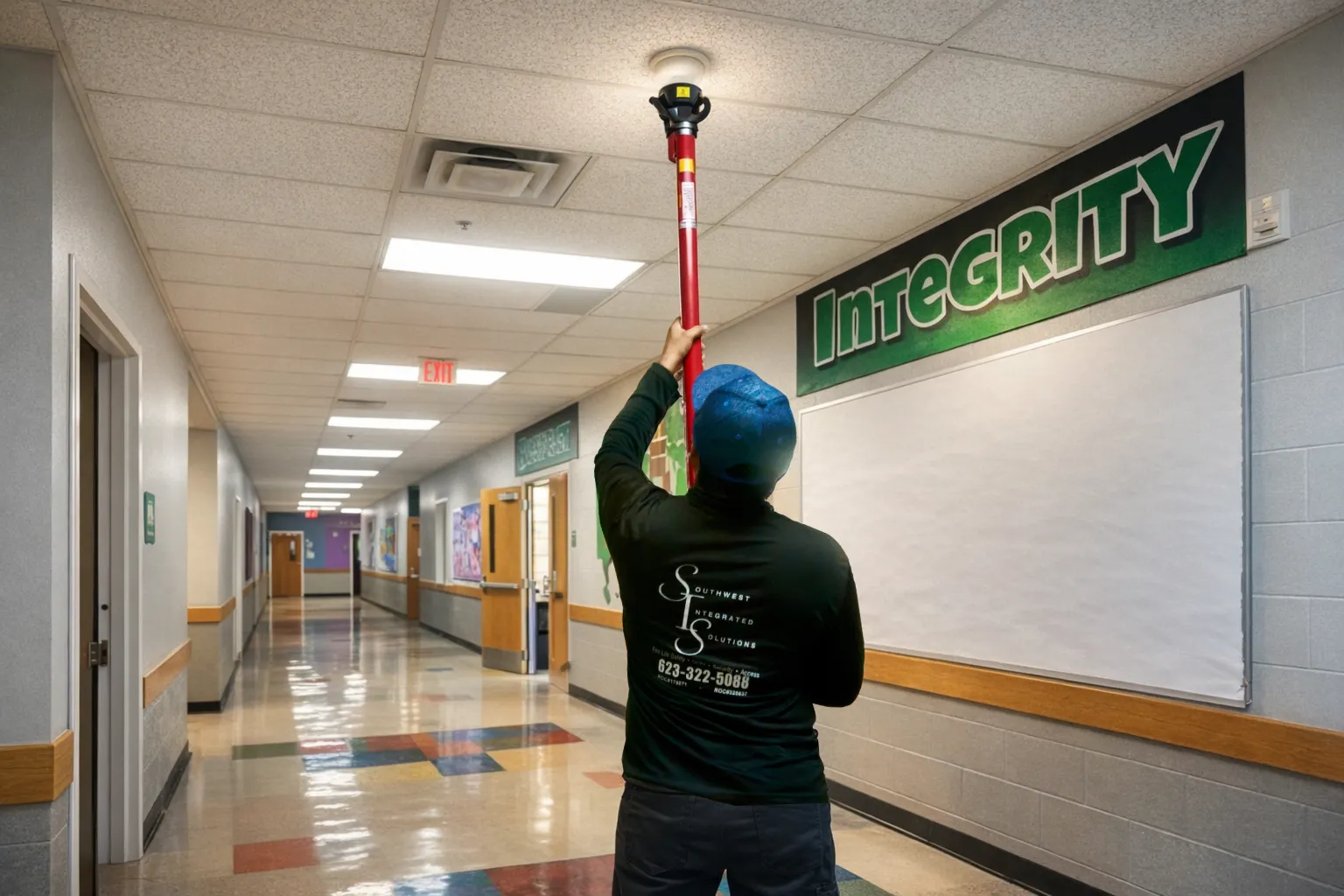
Southwest Integrated Solutions conducts ITM visits with NICET-certified technicians throughout Arizona. This certification reflects rigorous training specific to fire alarm and detection systems. Facility managers should confirm this credential before hiring any provider.
How Occupancy Type Changes Fire Alarm Testing Frequency
Hospitals and schools often face stricter testing schedules than standard office buildings. High-occupancy venues like theaters and arenas also have increased frequency requirements. This variation exists because consequences of failure differ by occupancy type.
Property managers overseeing multiple building types should not assume one schedule fits all locations. Each building’s occupancy classification determines its specific ITM calendar. Southwest Integrated Solutions helps clients map out this schedule across a diverse portfolio.
Consequences of Missing a Required Fire Alarm Inspection
Missed inspections can result in citations from the local fire marshal’s office. Insurance carriers may deny claims tied to a system lacking current documentation. Beyond financial risk, an untested system may fail when it matters most.
Property owners sometimes discover a missed inspection only after a failed annual audit. This often forces a rushed, more expensive catch-up inspection. Staying ahead of the schedule avoids this scramble.
Building an Inspection Calendar That Actually Works
A reliable inspection calendar starts with knowing your system’s NFPA requirements. Southwest Integrated Solutions builds this calendar into every service agreement. This proactive approach removes guesswork from compliance planning.
Multi-site organizations benefit from a centralized calendar covering every location’s requirements. This visibility helps facility teams avoid gaps between buildings’ schedules. A well-organized calendar also simplifies budget planning across the portfolio.
Working with a NICET-Certified Fire Alarm Provider
Not every alarm company carries the same level of technical certification. NICET certification specifically verifies expertise in fire alarm system design, installation, and service. Southwest Integrated Solutions has maintained this certification standard for over 20 years across Arizona.
Facility managers should ask about a provider’s NICET credentials before signing a service contract. This question reveals much about a provider’s technical depth. A properly certified provider protects your building and compliance record.
Fire Alarm Testing Documentation Facility Managers Should Keep
Every completed inspection should generate a written report identifying tested devices and results. This report should be stored with prior years’ documentation for easy comparison. Southwest Integrated Solutions organizes this documentation clearly so facility managers can retrieve it quickly during an audit.
Missing documentation can create a compliance problem even when the system functions correctly. Fire marshals often request this paperwork during routine inspections. Keeping records organized protects facilities from this avoidable citation risk.
Digital record-keeping has made documentation easier for many Arizona facilities. Southwest Integrated Solutions can provide records in digital format for easier long-term storage and access. This convenience matters most when records must be produced quickly during an unexpected review.
How Fire Alarm Inspection Arizona Requirements Differ by Building Age
Older buildings sometimes operate under grandfathered code provisions that differ from current new construction standards. This does not exempt them from inspection requirements but can affect specific technical standards. Southwest Integrated Solutions helps facility managers understand which code version applies to their building.
Renovations or significant system changes can trigger a requirement to meet current code, even in older buildings. This transition often catches property owners by surprise during renovation. Confirming code applicability early avoids costly surprises later.
Understanding your building’s code history is important for accurate compliance planning. Southwest Integrated Solutions reviews this history as part of our fire alarm service. This ensures inspection schedules and requirements reflect your building’s regulatory status.
Planning Ahead for Fire Alarm ITM Services Scheduling
Scheduling ITM services well in advance helps avoid the seasonal service rush many providers face. Facility managers should build inspection scheduling into their annual calendar rather than react to due dates. Southwest Integrated Solutions helps clients build this proactive scheduling into their maintenance agreements.
Multi-building organizations benefit from coordinated scheduling across their full property portfolio. This coordination prevents any building from falling behind on its inspection cycle. A centralized calendar helps facility teams manage this complexity with less effort.
Booking early often means faster access to preferred appointment times during a busy service season. Facilities that wait until the last minute face limited scheduling flexibility. Planning ahead protects compliance timing and scheduling convenience.