Arizona intercom systems have evolved far beyond the simple buzzer panels found in older apartment buildings. Today they are a core component of building security, visitor management, and real-time communication across residential, commercial, industrial, and healthcare environments. Whether you are evaluating a new installation, troubleshooting an existing system, or trying to understand why your entry panel stopped responding after a monsoon, this guide covers everything Arizona property owners and facility managers need to know about how intercom systems work, which type fits your needs, and when a problem has moved beyond a simple fix.
What Is an Intercom System?
An intercom system, short for intercommunication system, is a two-way electronic communication device that enables real-time audio and, in many modern configurations, video transmission between two or more points within a building or across a property. The defining characteristic of a true intercom is full-duplex communication, meaning both parties can speak and listen simultaneously — in contrast to simplex or half-duplex systems where only one party can transmit at a time.
The essential components of any intercom system include:
- Master station — the central control panel that initiates communication, manages the system, and typically controls door release functions
- Substations — individual units distributed throughout the property that users interact with to communicate with the master station or other substations
- Wiring or wireless connectivity — the physical or wireless infrastructure that carries audio, video, and control signals between units
- Door release mechanism — in access control-integrated systems, an electrically controlled door strike or magnetic lock that can be released remotely from the master station
Modern intercom systems extend well beyond voice communication. They integrate with access control, surveillance cameras, visitor management platforms, and building automation systems to create unified security and communication ecosystems that no single-purpose device can replicate.
How Arizona Intercom Systems Work
The operation of an intercom system follows a consistent sequence regardless of the technology platform it runs on. Understanding this flow helps property managers diagnose problems and communicate more effectively with service technicians.
The communication sequence:
- A visitor or user at a substation initiates communication by pressing a call button, speaking into a microphone, or presenting a credential to a reader
- The signal — audio, video, or both — transmits through the system’s wiring or wireless network to the master station or designated indoor unit
- The master station operator receives the call, views the visitor on a monitor if video is present, and responds through the two-way audio channel
- The operator grants or denies access by activating the door release function remotely, or communicates instructions to the visitor
- In more advanced systems, the call can be forwarded to a smartphone application, a remote monitoring center, or multiple substations simultaneously
Control functions that modern intercom systems manage:
- Remote door release for electrically controlled strikes, magnetic locks, and electrified hardware
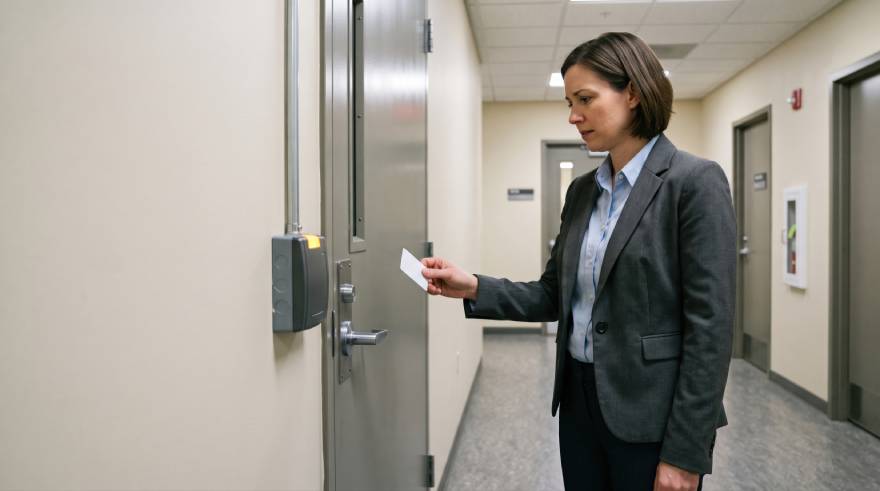
- Integration with access control credential readers for card, fob, PIN, or biometric-based entry
- Live video monitoring of entry points and common areas through integrated cameras
- Visitor logging with timestamped entry records and captured images
- Alarm activation and integration with building security systems
- Public address and mass notification across multiple substations simultaneously
Types of Intercom Systems
Choosing the right intercom system depends on the property type, infrastructure available, coverage requirements, and integration needs. Each system type offers distinct advantages and trade-offs that affect long-term performance and maintainability.
Wired Intercom Systems
Wired intercom systems use dedicated cabling — typically two-wire shielded cable, Cat-5/6 Ethernet, or coaxial cable depending on the system generation — to carry audio, video, and control signals between units. They are the preferred choice for permanent commercial installations where reliability, signal quality, and resistance to interference are priorities.
Analog wired intercoms represent the traditional generation of the technology and are common in older commercial buildings and residential complexes. They are dependable but limited in scalability and integration capability.
IP (Internet Protocol) intercoms represent the current standard for commercial installations. They transmit over standard Ethernet or Wi-Fi networks and offer:
- High-definition video at the entry point
- Remote management through browser or mobile application
- Integration with access control, VoIP phone systems, and building management platforms
- Scalability across multiple buildings or campuses without dedicated wiring runs
- Software-based updates that extend functionality without hardware replacement
For Arizona commercial buildings, wired IP systems offer the most reliable performance because they are not subject to RF interference from competing wireless devices, and their physical cable infrastructure is not affected by the signal degradation that wireless systems experience across thick masonry or concrete construction common in the Southwest.
Wireless Intercom Systems
Wireless intercom systems use RF (radio frequency) transmission or cellular networks to carry communication signals without dedicated cabling. They are well-suited for temporary installations, construction sites, locations where cabling is not practical, and smaller residential or light commercial applications.
RF intercoms are common in single-family homes and small businesses where a limited range of communication is needed between a front entry and an interior station. Cellular intercoms use mobile networks for communication, making them viable for remote gates, parking facilities, and locations where network infrastructure is unavailable.
The trade-off of wireless systems compared to wired alternatives is susceptibility to interference, limited range, and reduced reliability in high-density wireless environments. For Arizona commercial properties, wireless systems also face the added challenge of extreme heat affecting battery performance and electronics in outdoor units exposed to direct sun.
Video Intercom Systems
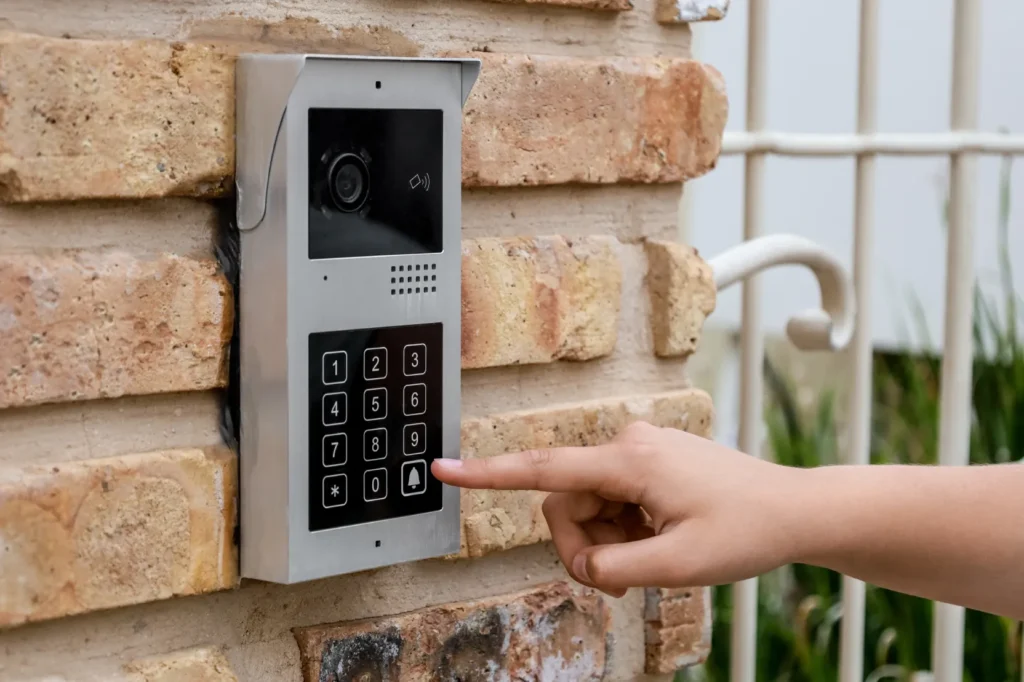
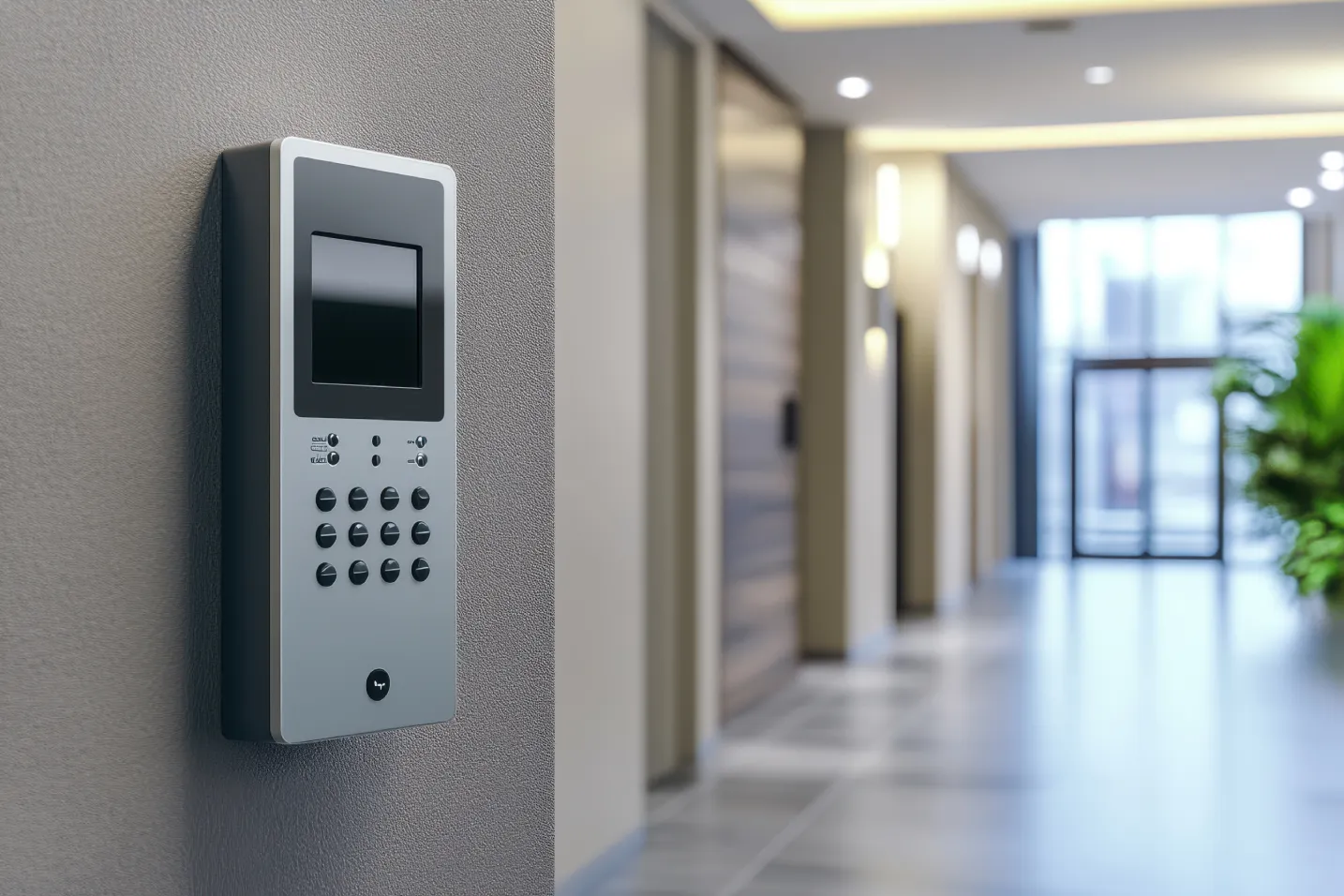
Video intercom systems combine audio communication with live video, allowing the person at the master station to see the visitor before granting access. A standard video intercom configuration includes an outdoor entry unit equipped with a camera, microphone, speaker, and call button, paired with one or more indoor monitors that display the video feed and provide two-way audio.
Modern video intercoms support:
- High-definition cameras with wide-angle lenses covering the full entry area
- Night vision capability for 24-hour visibility regardless of lighting conditions
- Snapshot and video capture of every visitor call for review and documentation
- Mobile app integration that forwards calls and live video to a smartphone when no one is at the indoor monitor
- Multi-tenant configurations in apartment or office buildings where calls are routed to individual units
For Arizona properties, selecting video intercom entry units with wide dynamic range (WDR) camera sensors is particularly important. The intense contrast between direct Arizona sunlight and shaded entryways can overwhelm standard sensors, producing blown-out or washed-out footage that defeats the purpose of having a camera at all.
Access Control Intercoms
Access control intercoms integrate communication and credential-based entry management into a single system. Rather than simply allowing a visitor to call an operator and request entry, access control intercoms combine intercom functionality with credential readers — card, fob, PIN, mobile credential, or biometric — allowing authorized users to enter without requiring operator interaction while still routing unrecognized visitors through the standard intercom call flow.
These systems are the appropriate choice for:
- Commercial office buildings managing employee and visitor entry separately
- Multi-tenant residential buildings where residents need keyless entry and visitors need to call individual units
- Healthcare facilities requiring documented access logs at every entry point
- Industrial sites where credential validation and entry documentation are regulatory requirements
- Gated communities and parking facilities managing vehicle and pedestrian access
Arizona Intercom Systems Challenges and How to Address Them
Arizona’s climate creates intercom system challenges that national product specifications and generic installation guides do not account for. Understanding these regional factors helps property managers make better purchasing decisions and recognize when a problem is environment-related rather than system-specific.
Extreme heat and UV exposure
Outdoor intercom entry panels in Phoenix regularly face ambient temperatures exceeding 110 degrees Fahrenheit, with direct surface temperatures on sun-exposed panels reaching significantly higher. This thermal stress causes display failures, plastic housing degradation, terminal connection loosening from thermal expansion, and power supply failure in units not rated for high-temperature environments. Any outdoor intercom unit deployed in Arizona should be rated to at least 140 degrees Fahrenheit operating temperature, and shade covers or protective enclosures should be considered for south and west-facing installations.
Monsoon season moisture and dust
Arizona’s monsoon season from June through September introduces rapid humidity spikes, heavy rainfall, and dust storms that infiltrate intercom panels through inadequate weatherproofing. Dust accumulation in speaker grilles muffles audio. Moisture causes terminal corrosion and short circuits. Camera lenses fog or streak during rapid weather changes. Outdoor panels should carry a minimum IP65 weatherproofing rating, and post-monsoon inspection and cleaning should be a standard annual maintenance practice for all Arizona commercial intercom installations.
HVAC electromagnetic interference
Commercial HVAC systems working at full capacity during Arizona summers generate electromagnetic interference that can introduce static, audio dropouts, and video signal degradation in intercom systems sharing building infrastructure with HVAC control wiring. Running intercom cabling in separate conduit away from high-voltage HVAC runs and using shielded cable for audio and video connections eliminates most EMI-related performance issues.
Hard water and mineral deposits
Arizona’s hard water, combined with nearby irrigation systems or outdoor water features, deposits mineral scale on camera lenses and speaker grilles that progressively degrades image quality and audio output. Quarterly cleaning of outdoor units with a diluted vinegar solution removes scale buildup before it becomes permanent. Redirecting irrigation spray away from entry panels eliminates the primary source of ongoing mineral contamination.
When to Call a Professional
Intercom troubleshooting follows a logical progression from simple checks to more technical diagnosis. Some issues resolve through basic steps. Others indicate underlying problems that require professional assessment, specialized test equipment, or component replacement that goes beyond what a building manager or maintenance staff member can safely address.
Basic troubleshooting steps property managers can take first:
- Confirm that the system has power — check power adapters, circuit breakers, and UPS units supplying the intercom
- Inspect all visible cable connections at the entry panel, indoor station, and control unit for looseness or visible damage
- Test communication between units to determine whether the problem is isolated to one station or system-wide
- Adjust volume settings and microphone sensitivity on both the sending and receiving units
- Attempt a system reset per the manufacturer’s instructions to resolve software glitches or lost configuration
- Check for firmware updates that may address known stability or performance issues
- Identify and eliminate nearby interference sources including HVAC equipment, wireless networks, or electrical panels
Call a professional intercom service technician when:
- The system has no power despite confirmed power supply and breaker status
- Audio or video fails on all units after basic troubleshooting steps produce no improvement
- The door release function fails to operate, which is a security-critical malfunction requiring immediate professional attention
- Physical damage to wiring, entry panels, or indoor stations requires component replacement
- Intermittent failures occur without an identifiable pattern, suggesting a wiring fault or component failing under thermal stress
- The system requires integration with access control, surveillance cameras, or building management platforms that exceed standard configuration capability
- Heat or monsoon damage has caused corrosion, short circuits, or display failures that require specialized cleaning or component replacement
- A system upgrade is needed to meet current security requirements, tenant expectations, or building code compliance
In Arizona commercial buildings specifically, any intercom failure involving the door release function should be treated as a security incident requiring same-day professional response. A building entry point that cannot be controlled is an access control gap regardless of whether the intercom itself is the cause.
Frequently Asked Questions About Intercom Systems in Arizona
What is the difference between a wired and wireless intercom system? Wired intercoms use dedicated cabling to carry audio, video, and control signals, delivering more reliable performance, stronger signal quality, and greater resistance to interference. Wireless intercoms use RF or cellular transmission without physical cabling, making them easier to install in locations where running cable is impractical but more susceptible to interference and environmental factors. For permanent commercial installations in Arizona, wired IP systems are the preferred standard for performance and longevity.
How long do commercial intercom systems last in Arizona? A professionally installed, properly maintained commercial intercom system in Arizona typically delivers eight to fifteen years of reliable service, depending on the technology platform, equipment quality, and exposure conditions. Outdoor units in direct sun without shade protection or adequate weatherproofing will have a shorter service life. Annual inspection, post-monsoon cleaning, and proactive component replacement of degraded parts extend system longevity significantly.
Can an existing intercom system be integrated with access control and cameras? In many cases, yes. Modern IP-based intercom systems are designed to integrate with third-party access control platforms, surveillance cameras, and visitor management software. The feasibility of integrating an existing system depends on the system’s age, manufacturer, and network compatibility. A professional assessment from a certified integrator is the most reliable way to determine whether integration is possible or whether a system replacement makes more economic sense.
What IP rating should outdoor intercom panels have in Arizona? A minimum of IP65 for standard Arizona outdoor installations, which provides full dust protection and protection against water jets from any direction. For installations in direct monsoon exposure, low-lying areas prone to flooding, or locations with overhead irrigation, IP66 or IP67 rated panels offer greater protection. In addition to IP rating, confirm that the panel’s operating temperature rating exceeds 140 degrees Fahrenheit for reliable summer performance.
How often should commercial intercom systems be serviced in Arizona? Annual professional inspection and cleaning is the minimum recommended service interval for Arizona commercial intercom systems. Properties in high-dust environments or with south or west-facing entry panels benefit from semi-annual inspection. Post-monsoon inspection each fall, immediately after storm season ends, is also strongly recommended to identify and address dust, moisture, or surge damage before it causes progressive system degradation.
What causes static or noise on an intercom system? Static or audio noise on an intercom system most commonly results from electromagnetic interference from HVAC equipment, electrical panels, or wireless networks; loose or damaged wiring connections; degraded cable shielding; or moisture infiltration into outdoor panels. In Arizona, HVAC-related EMI and monsoon moisture are the two most frequent causes of audio quality degradation. A professional technician can use signal testing equipment to isolate the source and recommend the appropriate corrective action.
Conclusion
Intercom systems are the communication and security backbone of modern Arizona commercial buildings, and their reliability depends on matching the right system type to the property, installing it to account for Arizona’s specific environmental demands, and maintaining it with the regularity that the desert climate requires. Wired IP systems deliver the most capable and durable platform for commercial applications. Video and access control integration transforms a basic communication device into a unified security tool. And knowing when a problem has moved beyond basic troubleshooting and requires professional intervention protects both building security and long-term system investment. When Arizona’s heat, dust, and monsoons push your intercom system past what a reset or volume adjustment can fix, the right professional response makes all the difference.
Southwest Integrated Solutions: Arizona’s Intercom System Specialists
At Southwest Integrated Solutions, we design, install, repair, and maintain intercom systems for commercial properties across the Phoenix Metro area and throughout Arizona. Our certified technicians bring deep knowledge of Arizona’s specific climate challenges and the full range of wired, wireless, video, and access control intercom technologies — from legacy system repairs to complete IP-based system upgrades. Whether you are troubleshooting a monsoon-damaged entry panel or planning a new integrated intercom and access control system for your facility, our local team is ready to respond.
Contact Southwest Integrated Solutions for a Free Intercom System Consultation Today →
 Call us: (623) 322-5088
 Visit: swi-solutions.com
 Email: [email protected]